Fairy tales as truth
What Are You Going ThroughFairy tales as truth names a distinction the book draws between stories that merely entertain and stories that make fundamental vulnerability legible. Fairy tales may simplify the world through familiar patterns, but, in the friend’s account, their simplicity does not make them false: they are sublime, unsettling, and close to the conditions of being human. Their truth lies not in realistic detail or neat solutions, but in their recognition that people can be subject to hidden forces and that anything may happen, for good or ill.
Fairy Tales and Mystery Stories
The contrast begins with mystery fiction. Like fairy tales, mysteries often rely on recognizable types and clear moral divisions. Their villains may be serial killers rather than ogres, and their detectives may be righteous avengers rather than princes, Galahads, or saints. Cruelty and violence can fill the plot, but evil is ultimately defeated; even when the good do not live happily ever after, the reader receives closure. That resolution is attractive partly because it is largely unavailable in real life.
The friend rejects the idea that fairy tales offer the same kind of escape. They may also simplify and follow familiar formulas, but their truths run deep. Children, the narrator suggests, understand the experience that gives these stories their force: being at the mercy of hidden, arbitrary powers. In such a world, events cannot be made safe simply by knowing the rules. The possibility of wonder and rescue remains, but so does the possibility of inexplicable harm. Fairy tales are therefore more mysterious than mystery novels, not because they withhold the solution to a puzzle, but because they acknowledge a reality that resists tidy explanation.
The distinction is also one of afterlife. Mystery stories are described as entertainment meant to be forgotten; fairy tales endure as classics, belonging to the heart rather than the glands. Their formulas do not cancel their seriousness. Instead, their recurring shapes allow truths about fear, vulnerability, and consequence to persist across tellings.
Tellings, Readers, and the Swans
The narrator connects the tradition to the women who preserved it. When collectors set out to record the tales of a region, they began by writing down stories told by its old women. This history makes oral telling central to the concept: the stories reach the page through people who have carried them in speech, rather than arriving as detached inventions. The friend’s question about the narrator’s favorite tale turns that history into a personal exchange.
The narrator chooses The Six Swans. As a child, the narrator wanted to be the brother whose sister cannot finish his enchanted shirt in time, leaving him human again but still marked by a wing. The friend calls this wanting to be a freak; the narrator reframes it as wanting to be different, to retain part of the former self. The small physical remainder matters: the transformation does not erase everything that came before. The tale’s appeal, as the narrator describes it, rests in this survival of difference, not in a perfectly completed return to normality.
Reading Together at the Edge of Loss
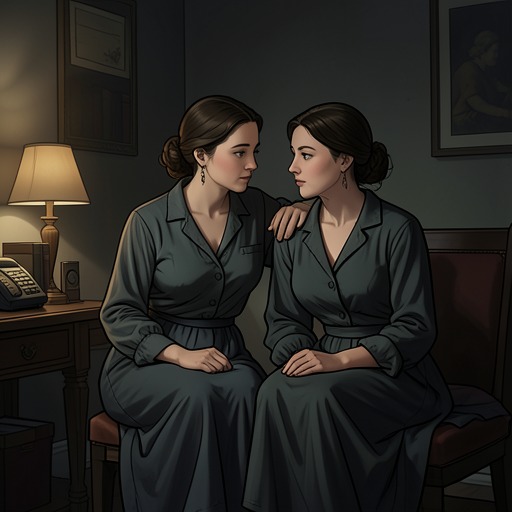
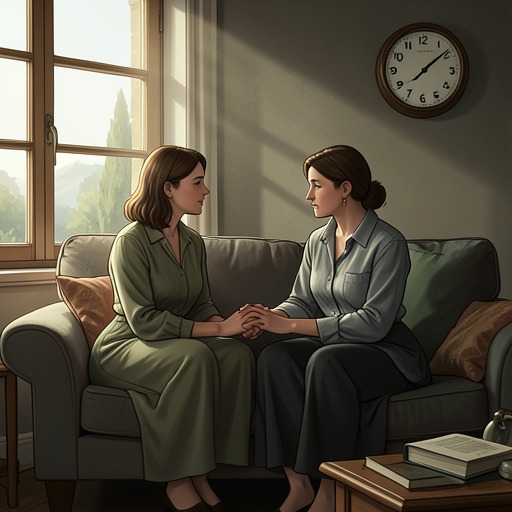
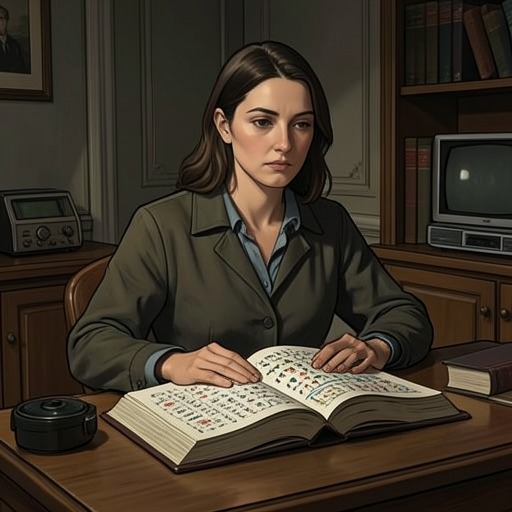
The argument about fairy tales takes place within the narrator’s last days with her friend. Searching the living-room bookcase, the narrator pulls The World’s Best Folk and Fairy Tales from a bottom shelf and proposes it as their reading from then on. The friend cannot get enough of the book; the narrator, by contrast, nearly loses her voice. The scene gives the idea of truth a concrete form: the tales are not just an object of literary debate but something the two women share as the friend is dying.
A memory of an old film based on the lives of the Brontë family sharpens the scene’s relation to mortality. In the remembered moment, a dying sister says that, having feared life, she does not greatly mind leaving it—until a beautiful day outdoors makes her wish she could live a little longer. The narrator admits that she may be remembering the scene incorrectly and that it has returned often over the years. Set beside the fairy-tale reading, the memory holds together acceptance of death and attachment to the beauty of the world. The book does not resolve that tension; it lets the remembered scene, the friend’s illness, and the stories remain alongside one another.
Truth, Language, and the Ending
The book’s larger reflections on writing complicate any claim that stories can reproduce experience exactly. The narrator abandons a planned journal of the friend’s final days because writing feels like a betrayal of the experience itself: language cannot precisely express what is happening, and a written account would fall beside reality rather than contain it. Yet this failure of exact representation does not make every story empty. The fairy tale’s truth is of another order: it gives shape to vulnerability without pretending that shape is a complete record of life.
At the close, the narrator describes the time with the friend as a fairy tale that will end, and fears being alone when it does. Walter Benjamin’s reflection on a reader hoping to warm a shivering life with a death read about links storytelling to the desire for consolation, while the narrator’s repeated admission of having tried to write acknowledges the distance between life and its account. The book ends by allowing both the effort and its limits to stand: the narrator has tried, and failure does not undo the value of the attempt. Fairy tales matter here not because they promise a happy ending, but because their inherited forms can accompany people through realities that offer no such guarantee.